
Why Market Research Matters in Today’s Business Environment
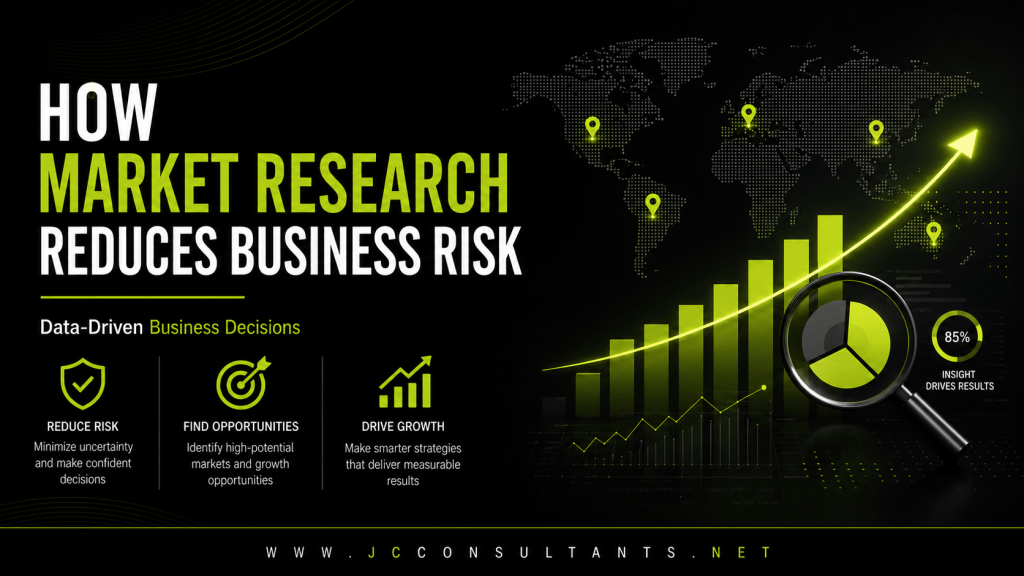
Every business decision carries some level of risk. Whether launching a new product, entering a new market, expanding operations, selecting suppliers, or investing in marketing initiatives, organizations constantly face uncertainty. Companies that make decisions based on assumptions often expose themselves to unnecessary risks, while organizations that rely on reliable data and market intelligence are better positioned to achieve sustainable growth.
Market research provides the information businesses need to understand customers, competitors, industry trends, and market opportunities. By transforming raw information into actionable insights, market research helps organizations reduce uncertainty and make more informed decisions.
In an increasingly competitive global marketplace, access to accurate market intelligence can be the difference between success and costly mistakes.
What Is Market Research?
Market research is the systematic process of collecting, analyzing, and interpreting information about a market, industry, customers, competitors, and business environment.
The primary objective of market research is to support better decision-making through data-driven insights.
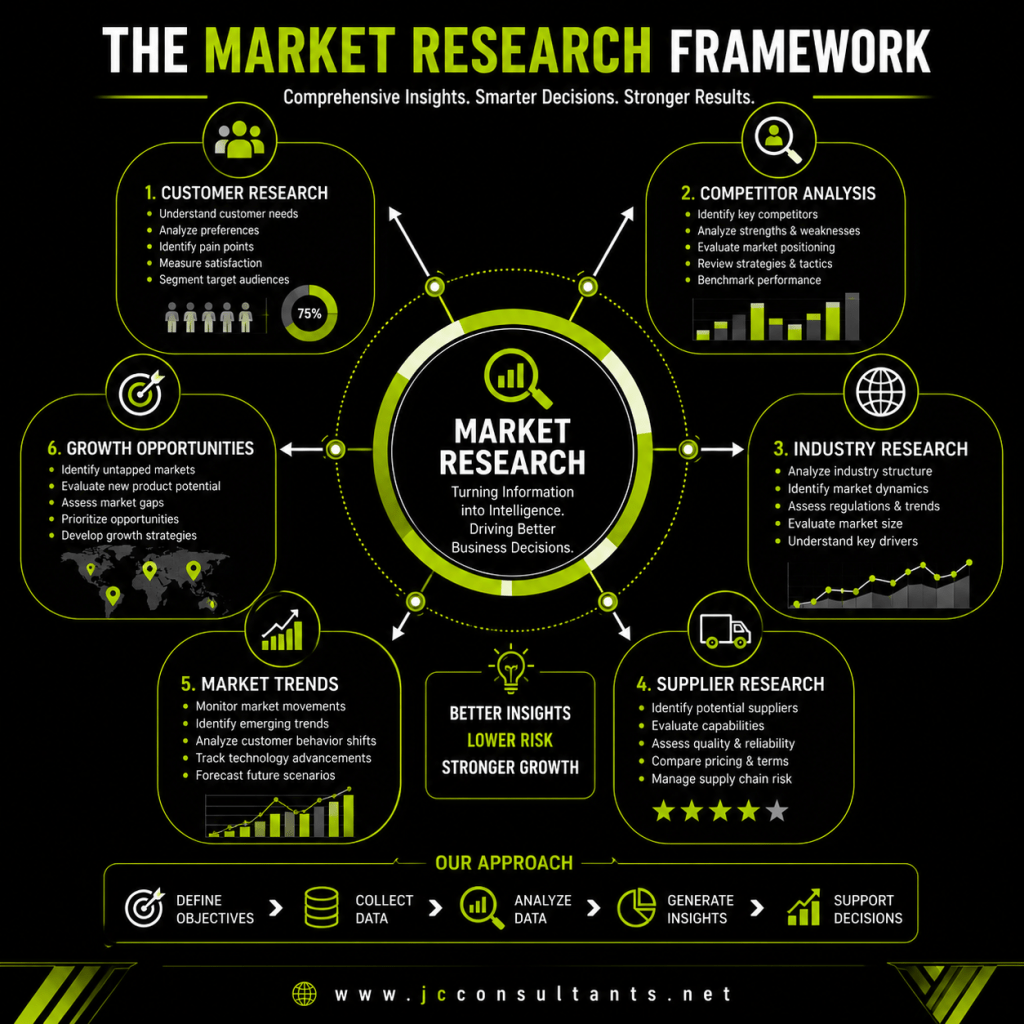
Market research may involve:
- Customer research
- Competitor analysis
- Industry analysis
- Supplier research
- Market sizing
- Trend analysis
- Geographic market evaluation
- Product research
Organizations of all sizes use market research to minimize uncertainty and identify opportunities for growth.
Common Business Risks Without Market Research
Many business failures occur because organizations make decisions based on assumptions rather than evidence.
Common risks include:
Misunderstanding Customer Needs
Businesses may invest significant resources in products or services that customers do not want or need.
Entering the Wrong Market
Expanding into a market without understanding demand, competition, or regulatory requirements can result in substantial losses.
Choosing the Wrong Suppliers
Poor supplier selection may lead to quality issues, delays, or increased costs.
Underestimating Competitors
Competitors often possess advantages that are not immediately visible without proper analysis.
Ineffective Marketing Investments
Marketing campaigns based on assumptions frequently generate poor returns.
Market research helps organizations reduce these risks before significant investments are made.
How Market Research Supports Better Decision-Making
Understanding Customer Behavior
Successful organizations understand their customers.
Research helps answer critical questions:
- Who are your customers?
- What problems do they face?
- What influences purchasing decisions?
- What features do they value most?
Customer insights help organizations align products and services with market demand.
Evaluating Market Opportunities
Not every opportunity is worth pursuing.
Market research helps determine:
- Market size
- Growth potential
- Competitive intensity
- Barriers to entry
- Customer demand
These factors allow organizations to prioritize opportunities with the highest probability of success.
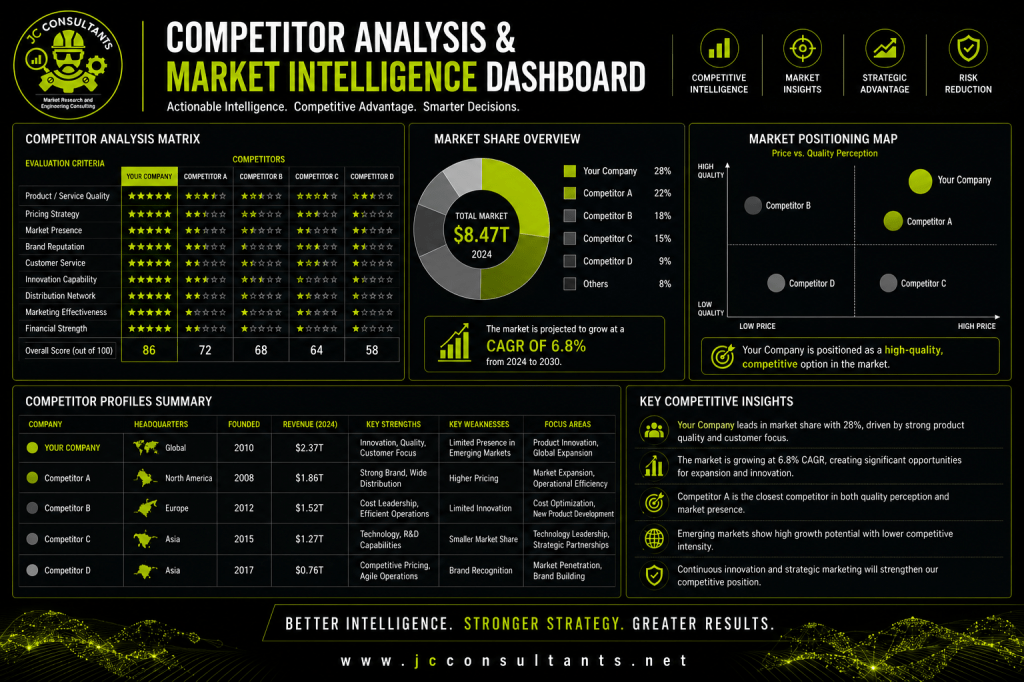
Analyzing Competitors
Competitive intelligence is one of the most valuable outcomes of market research.
Organizations can evaluate:
- Competitor strengths
- Weaknesses
- Pricing strategies
- Marketing approaches
- Product offerings
- Market positioning
This information supports more effective strategic planning.
Supporting Strategic Planning
Executives and managers require reliable information when making important decisions.
Market research contributes to:
- Business planning
- Investment decisions
- Product development
- Expansion strategies
- Marketing strategies
- Risk management initiatives
Data-driven decisions typically outperform decisions based solely on intuition.
Market Research Methods
Organizations use multiple research methods depending on objectives.
Primary Research
Primary research involves collecting original data directly from sources.
Examples include:
- Surveys
- Interviews
- Focus groups
- Site visits
- Observations
Secondary Research
Secondary research uses existing information.
Examples include:
- Industry reports
- Government databases
- Trade publications
- Academic research
- Market studies
Combining primary and secondary research often provides the most comprehensive perspective.
The Role of Business Intelligence
Modern market research increasingly incorporates business intelligence tools.
Business intelligence enables organizations to:
- Analyze large datasets
- Identify trends
- Monitor competitors
- Track market changes
- Improve forecasting
The integration of market research and business intelligence creates a stronger foundation for strategic decision-making.
Benefits of Market Research
Organizations that invest in market research often achieve:
- Reduced business risk
- Improved decision-making
- Better understanding of customers
- Stronger competitive positioning
- More effective marketing
- Higher return on investment
- Increased growth opportunities
Research provides clarity that supports long-term business success.
Conclusion
Market research is more than a data collection activity. It is a strategic tool that helps organizations reduce uncertainty, identify opportunities, understand competitors, and make better decisions.
In a rapidly changing business environment, organizations that invest in reliable market intelligence are better equipped to navigate challenges and achieve sustainable growth.
At JC Consultants, we provide market research, competitor analysis, supplier research, business intelligence, and strategic research services that help organizations make informed decisions with confidence.
 JC Consultants
Leave a comment